Spice Crop Production, the Prospects and Importance
The prospects of spice crop production in the Philippines are bright because of its high market demand. Types and varieties of high quality spice crops are available locally and can be grown in almost all part of the country.
In the Philippines, the most common type of spice crops grown are onion, garlic, ginger, black pepper, hot pepper, celery, shallots, leek, bay leaf, and tanglad. Among these crops however, only onion, garlic, ginger, black pepper, and hot pepper are grown commercially because of their high market demand and usefulness.
Uses of Spice Crops
Spice crops are distinctly classified because they give an agreeable flavor and aroma to food. They contain volatile oils, proteins, fibers, starch, minerals, and tannins which give flavor and have preservative and antiseptic properties. Spices are primarily used as food seasoning. In addition to their culinary uses, spices are also utilized as flavoring agent in beverages, active ingredient in syrubic medicines, coloring agent of textiles, and an important constituent in cosmetic and perfume products.
Recommended Varieties of Spice Crops
- Red Creole. This variety has medium sized, flat to medium oblate bulbs, well-filled neck, and medium thick, dull buff, and red or purplish skin.
- Granex. This variety is a hybrid produced by U.S. Department of Agriculture.
- Native onion. Generally, this variety is a bulb multiplier.

- Native ginger. This variety is the most commonly grown nationwide. It produces small rhizomes which are more pungent than any other variety.
- Imugan. This variety is an improved native strain producing medium sized rhizomes.
- Hawaiian ginger. This variety has large, thick, yellowish brown rhizomes with pink traces.
- Jamaican Oya. This variety produces pinkish rhizomes.

- Native Garlic. This variety is most commonly grown nationwide. It produces bulbs with relatively small cloves but is most pungent among the variety raised in the Philippines.
- Hawaiian Variety. Originating from Hawaii, this variety has a relatively bigger bulb and cloves.
- Californian Variety. This variety originated from United States.

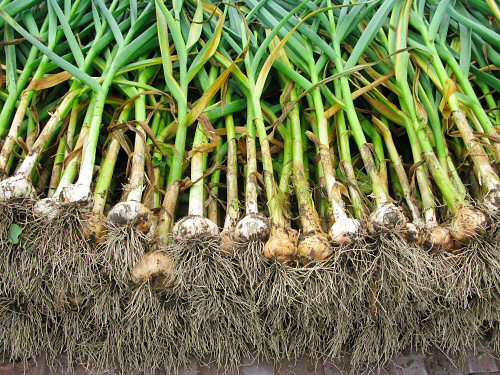
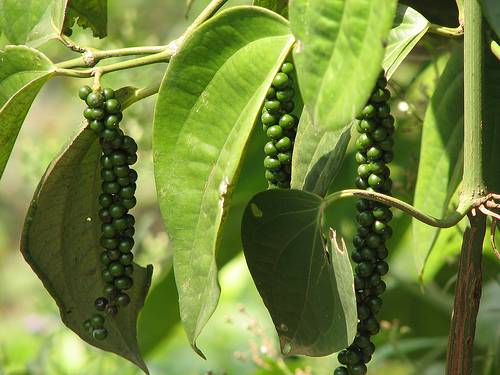
In the Philippines, the black pepper varieties are name according to the place where it originated. Thus, Batangas pepper is the name of the variety grown in Batangas, Laguna pepper for those which originated in Laguna, and Zamboanga pepper for varieties raised in Basilan City.
Hot pepper is one of the pungent varieties of the Capsicum pepper. There is no available data of the varieties of this pepper but several types be identified locally. Most of the hot pepper grown in the Philippines have definite fruit maturity and vary in size, shape, and quality of fruits. In Southern Tagalog, varieties of pepper are known as siling labuyo, siling tingala, siling pansigang, siling presko, and siling bumbilya.

Factors to Consider in Raising Spice Crops
Climate and Altitude. Different spice crops require relatively different climatic conditions. Adaptation of crops to climate is important to effective spice crops management.
Selection of good seed varieties
- Select high-yielding varieties that are adapted to soil and climatic conditions of the locality.
- Select disease free and pest resistant varieties.
- Select varieties that have high market demand.
- Select varieties with good eating quality.
- Select varieties with excellent post-harvest characteristics.
Topography of the Land. Level land with good drainage system is suitable for spice crop production. However, slightly sloping land is preferable to ensure water drainage system especially during heavy rainfall.
Soil fertility. The soil in the farm site must be fertile enough to induce growth and production.
Location or Site. The site of spice crop production must be near good transportation facilities. If possible, it should be located near the target market for ease and economy of transport.
We are giving FREE Selling and Business Consultation; please
click the link below,
We prepare Speech and Messages; please click the link below,