Management Practices in Goat Raising
The economic importance of goat raising in the Philippines lies in the production of milk while the yield of goat's meat known as chevon is of secondary consideration.
Four Ways of Raising Goat
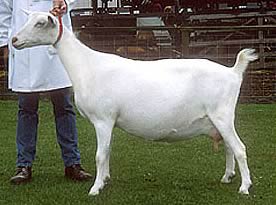
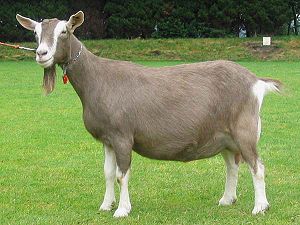


Anglo-Nubian

Jamuna Pari
Limit the yearling buck services to 25 doe per year. older bucks can cover up to 75 per year. the buck to doe ratio is normally 1 buck per 25 does.
Common Infectious Diseases of goats
Four Ways of Raising Goat
- Tethering. This is the most common practice of those who raise 1-6 goats. Each goat is tied with rope 8 meters long. The animals are transferred from one pasture to another depending on the availability of fresh grasses. Water is supplied at the goat's shelter at night. Occasionally, feed supplement are given.
- Extensive production. Fifteen goats are kept in small shed and are allowed to browse during the day back to their shelter at night. There is less management given to this type of production especially when the animals are trained to go back to their shelter at night.
- Intensive production. This method of raising goat requires a larger number of goats in the herd. There is a need for wider pasture land and houses and stalls are also provided. Fences are constructed to keep the animals in. Grasses and concentrate feeds are given to the animals.
- Integration in agricultural plantation. This method depends on the number of goats raised and commonly practiced in agricultural land planted to fruit trees like mango, coconut and other plants not affected by browsing goats.
Types of Breeds
There are many breeds of goats in the Philippines. They are as follows:
A. Dual Purpose
- Anglo-Nubians. It is basically a tropical breed with distinguishing features like long, wide pendulous ears and a "Roman Nose". This breed originated from England and a crossbreed of the Nubian buck and the English doe. The color ranges from black to gray. This breed can produce 2-3 liters of milk a day.
- Jamuna Pari. It originated from India and thrives well in tropical countries like in the Philippines. It is used mainly for the production of chevon (meat of goat) but can kept for milking purposes.
- Saanen Goat. Originated from Switzerland and considered the largest among Swiss breeds. The buck looks feminine and has no horn. the body and neck are long. This breed has the highest milk production.
- Toggenburg. This breed also originated from Switzerland but smaller than Saanen and Anglo-Nubian. It's distinguishing features are the white markings on the face, legs and tail. It has erect ears like Saanen.
- Alpine. This breed came from Europe and the colors range from off block white markings on each side of the belly. This breed can yield as much as 4 liters daily. It's lactation period ranges from 280-300 days.
Saanen
Toggenburg
Alpine
Anglo-Nubian
Jamuna Pari
Selecting Breeds to Raise
A. Doe (female breeding goat)
Select a doe that is adaptable to the area with similar climatic conditions. The body weight should not be less than 25 kilos and those that have given birth at least once should be selected for breeding. The udder should be free from abnormalities or appearance of any lumps.
B. Buck (male breeding goat)
Select a buck with a good producing line based from the records. The buck should come from productive parents.
The generally accepted buck to doe ratio is 1:25. The buck should be a year old. Select a buck with the following characteristics:
- Alertness
- long body and good body conformation
- well-developed sex organs
- aggressive
- masculine appearance.
Feeds and Feeding Goat
Goats, like any other livestock, need the same nutrients such as protein, carbohydrates, mineral, vitamins and water but their need for some nutrients are not as critical. Bacteria and protozoa in the rumen of the goat have the ability to manufacture available nutrients from silage and and other fibrous feedstuffs. goats are voracious herbivorous animals. They eat weeds and anything that may considered farm waste products.
A. Feed Requirements
The feeding program for goats, being ruminants should be based on the type and quality of roughage available. The available roughage will determine the amount of concentrates needed to supplement the ration.
Lactating Doe
A doe should be fed with forage concentrates containing 15-20 % crude protein to induce milk production. Vitamins and minerals mixed in water should also be provided.
Breeding Goats
Breeding goats can be fed solely on pasture lands with good vegetation and several forage crops. If forage is not abundant the animals can be fed with concentrates as they can take. Vitamins and minerals mixed with water should also be provided.
Feed Requirement of Goat
Age
|
Kinds
of Feeds
|
Amount
per Day
|
At birth- 3 days old
4 days- 2 weeks old
2 weeks – 16 weeks old
4 months – kidding
Dry, pregnant, bucks
Lactating
|
Colostrums
Whole milk (goat milk) vitamin and mineral mixed water.
Whole milk or milk replacer grass, legumes, hay
Forage; vitamin and mineral mix with water concentrates (16-18% c.p.)
Forage; vitamin mineral mix with water.
Forage; vitamin mineral mix with water concentrates 16-18
|
Ad libitum (3 to 5x feeding)
Ad libitum
Ad libitum, increase amount with out digestive upset
Ad libitum
Ad libitum
Ad libitum
|
Housing and equipment
For small scale goat raisers, they usually keep their goats under the house for safety. During the day the animals are tethered and pastured in nearby areas where grasses are abundant. When the goats increases in number, adequate housing and equipment should be provided. The house should have a small yard with a strong fence to prevent the goats from going out and browing other plants around. Goats can climb and walk on slopes so the height of the fence should be 1.5 meters to successfully restrain the animals. Goats prefer to stay on elevated places, therefore the floor of the goat house should be cemented and elevated. Elevating the pen with slotted bamboo or cement flooring will provide easy cleaning. House of goats can be made from local materials. The size of the goat house depends on the type of production being raised. Construct separate houses for the animals especially the doe that ready to give birth.
The stalls of the goats should have racks and boxes where forage crops, grasses, and salt are placed. Water buckets should be placed inside the barn for goats need water from time to time.
Breeding Management
Here are some reproductive characteristics of goats.
Age and Puberty
|
4-8 months
|
Cycle type
|
Poly estrus
|
Cycle length
|
18-21 days
|
Duration of heat
|
2-3 days (secondary) heat 8-12 days after
|
Gestation period
|
155 days
|
Best breeding time
|
Daily during estrus (in heat)
|
Does reach puberty
|
4-8 months
|
Best breeding age of doe
|
8-10 months
|
Best breeding of buck
|
8 months old
|
Limit the yearling buck services to 25 doe per year. older bucks can cover up to 75 per year. the buck to doe ratio is normally 1 buck per 25 does.
The doe matures early, have high fertility and are capable of multiple births with a short gestation period.
The following are signs of heat or estrus.
- Mucus discharge from the vulva
- Uneasiness, constant urination and lack of appetite
- Stays near the buck
When breeding, always introduce the doe to the buck, not the buck to the doe herd. Two to four breeding during the heat period will do.
Health Management Practices
Sanitation
Clean the pen daily and disinfect at least twice a month. Collect accumulated feces and provide a pit to store the feces before they can be used as fertilizer for vegetable garden or orchards.
Deworming
Deworm the goats regularly. Know what kind of internal parasite is affecting your herd before deworming or else it is a waste of money and effort. Parasites rank second in causing heavy mortality to goats.
External Parasites
Lice and ticks are the common parasites. When these parasites are present, apply chemicals against lice and ticks in a powder form. mix the powder form chemicals with 7 to 10 parts of starch or flour and apply as dusting powder. Avoid using liquid spray form.
Deworming
Deworm the goats regularly. Know what kind of internal parasite is affecting your herd before deworming or else it is a waste of money and effort. Parasites rank second in causing heavy mortality to goats.
External Parasites
Lice and ticks are the common parasites. When these parasites are present, apply chemicals against lice and ticks in a powder form. mix the powder form chemicals with 7 to 10 parts of starch or flour and apply as dusting powder. Avoid using liquid spray form.
Common Infectious Diseases of goats
A.
Disease
|
Mode
of Transmission
|
Symptoms
|
Control
|
1. Bacterial Pneumonia
2. Mastitis
3. Sore Mouth
4. Foot and Mouth Disease
5. Anthrax
6. Tetanus
|
Direct contact from infected animal
Direct or indirect
Direct or indirect contact
Direct and indirect contact with carriers
Direct ingestion of infected materials and indirect contact of
carriers
Direct infection due to entry of organism in wounds, example
castration and dehorning
|
-Fever, nasal discharge, respiratory distress
-Swollen udder, fever, loss of appetite, dehydration
-Scabby, lesions in the lips, muzzle, eyelids, udder and feet.
-Erosion between hoofs, coronary band, teats and udders oral mucosa
and tongue
-Sudden onset of fever, depression and loss appetite bloody diarrhea
-Rigidity and stiffness of muscles convulsion
|
-Practice clean environment
-Proper treatment of injured teats with antiseptics
-Apply anti-biotic ointments to prevent secondary complications.
Vaccination
-Quarantine sick animals; disinfect areas with lye caustic soda. Immunization
is a must.
-Dead animals should be cremated or buried deeply under a layer or
lime.
-Use clean and sterilized castrating knife. Treat wound with
oxidizing antiseptic (hydrogen peroxide)
|
B.
Parasites
|
Mode
of Transmission
|
Symptoms
|
Control
|
1. Lice
2. Ticks and mites, blue tick,
red tickbrown tick and mange
|
Either suck or bite the animal
They live on the animal’s body suck the blood of goats
|
The goat becomes annoyed and restless. Lice can reduce milk
production
Goats become irritated and restlessness.
|
Practice proper sanitation. Spray Malathion, but be sure not to
contaminate their drinking water.
Disinfect the premises of goats with insecticides such as benzene
hexachloride.
|
Marketing Goat Products
The demand for live goats is highest during December and January. The goat raiser should see to it that he will sell his goats during this period to demand a higher price. it has been stated repeatedly that in selling farm products, a direct-to consumer trade is advisable. However, there are some farmers who can not escape the middlemen marketing scheme because of other activities in the farm or cannot bring their products to consumers.
Goats are often sold by live weight or as frozen meat. goat meat are sold by kilos. Well known chevon buyers are the restaurant owners and proprietors of beer gardens who sell special dishes of goat's meat as kaldereta to their consumers.
Goat's milk can also be sold fresh and processed into pastillas candies and other baked products.