Types and varieties of Fiber Crops
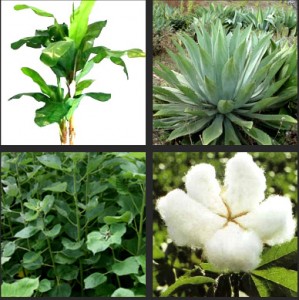
Abaca. This plant is a native fiber crop of the Philippines. The varieties of abaca existing today are descriptive of the size and color of the stalks, quality of the leaf sheaths, type of fruit, and quality of fiber produced.
The most important varieties of abaca that grown and name according to region they were produced,
- Bicol region: Tinawagan, Lausigon, Sagurud, and Hybrid Lausmag 24, Itolus 45, and Itolus 39.
- The Visayan: Linawagan, Minennogra, Inosa, and Hybrid Lipino, Linlib, and Linlay.
- The Mindanao: Tangongon, Bongolanon, and Maguindanao
Pineapple:The only variety of pineapple which is commonly raised for fiber production is the cabezine or the queen variety. The cabezine variety has smaller crown but has long and spiny leaves.
Ramie. This fiber-yielding plant is botanically known as Boehmeria nivea. The only variety of Ramie that grows best under Philippine conditions is the China grass which extensively grown in different parts of the country.
Jute. The jute plant that are known in the Philippines are lumbay, panigbin, and the variety called sumpa in Visaya and Pasao na Bilog in Tagalog. The fiber of this varieties are used chiefly in the manufacture of coarse fabrics such as sacks, gunny cloth, gunny bags, carpets, matting and backing for linoleum, and oil cloth.
In choosing a variety of fiber crop, however, select planting materials with following characteristics:
- Good yielders
- Well adapted to local soil and climate conditions
- Resistant to drought and winds
- Have large and tall stalks
- Early bearers
- Have a long life span.
- Have many bearing stalks at harvest time
- Have many-bearing stalks at harvest time.